THE RESTORATION
OVERVIEW
Since taking ownership of the North Manitou Shoal Light in 2016, NMLK has been working to preserve and restore the lighthouse structure. As the majority of the exterior work has been accomplished, our focus has shifted to the lighthouse interior. New finishes will be tasteful and honor the history of the lighthouse, while also making comfortable spaces for visits and overnight stays. All restoration activities are being conducted in accordance with EPA, SHPO, and Coast Guard requirements.
Details about our restoration journey are provided below. Sponsors for this work are an instrumental part of getting us to the finish line, which is in sight now! Click here to find out how you can become a sponsor!
RESTORATION TIMELINE
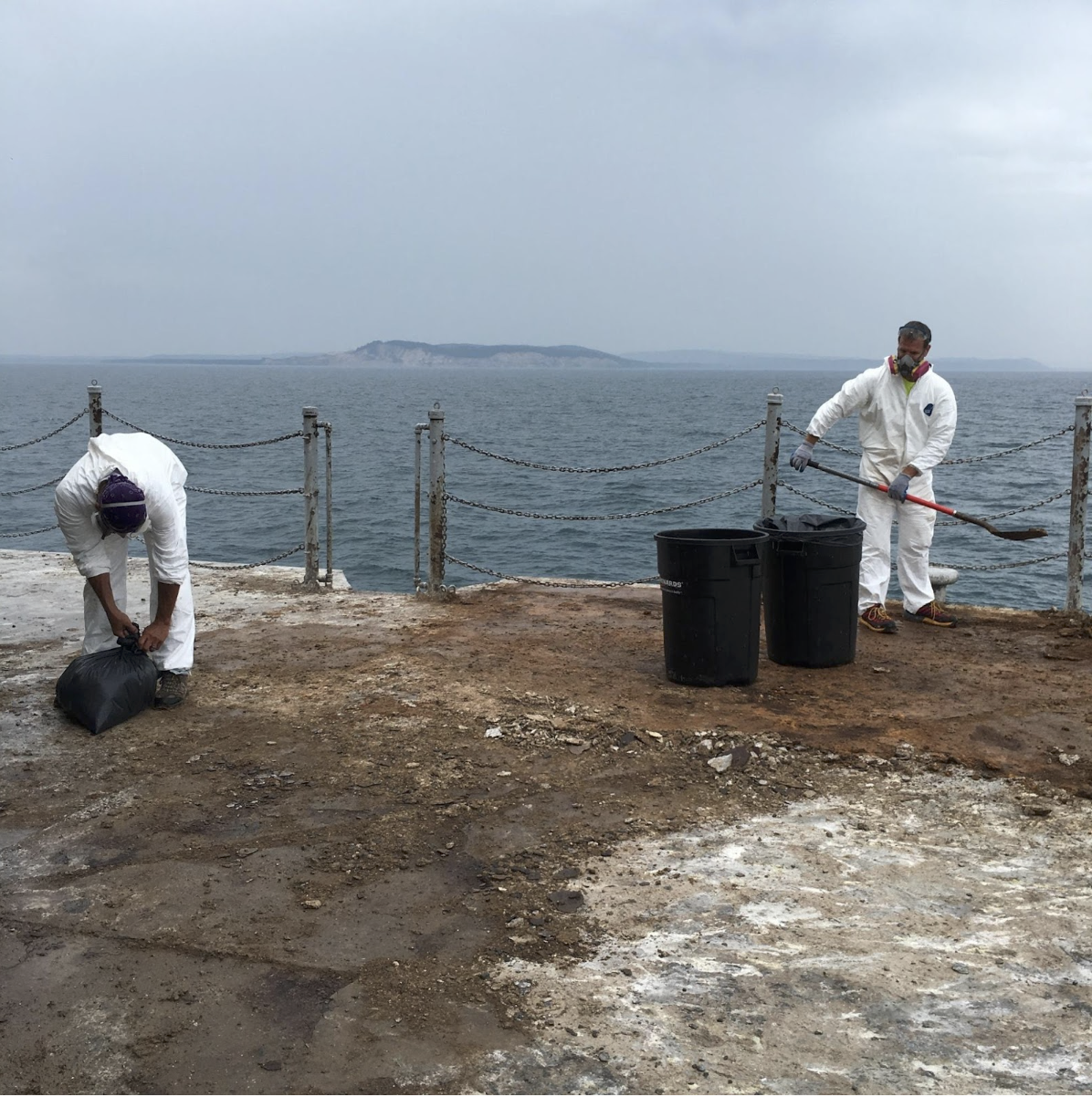
Contactors scraping bird guano and other debris from the deck in 2017.
2017
During our first site visit in September 2016, the decks of the Crib were covered with a thick layer of cormorant guano (and you could “smell” the lighthouse from 100 yards away). There was no daylight in the interior of the lighthouse because all the windows were boarded up. In addition, most rooms were littered with debris from peeling paint and plaster falling from the walls and ceilings. Our first step in the restoration process was to scrape bird guano from the Crib's decks and clean up other debris littering the exterior and interior. Our contractor removed about 160 large bags of debris from the Crib during that process.
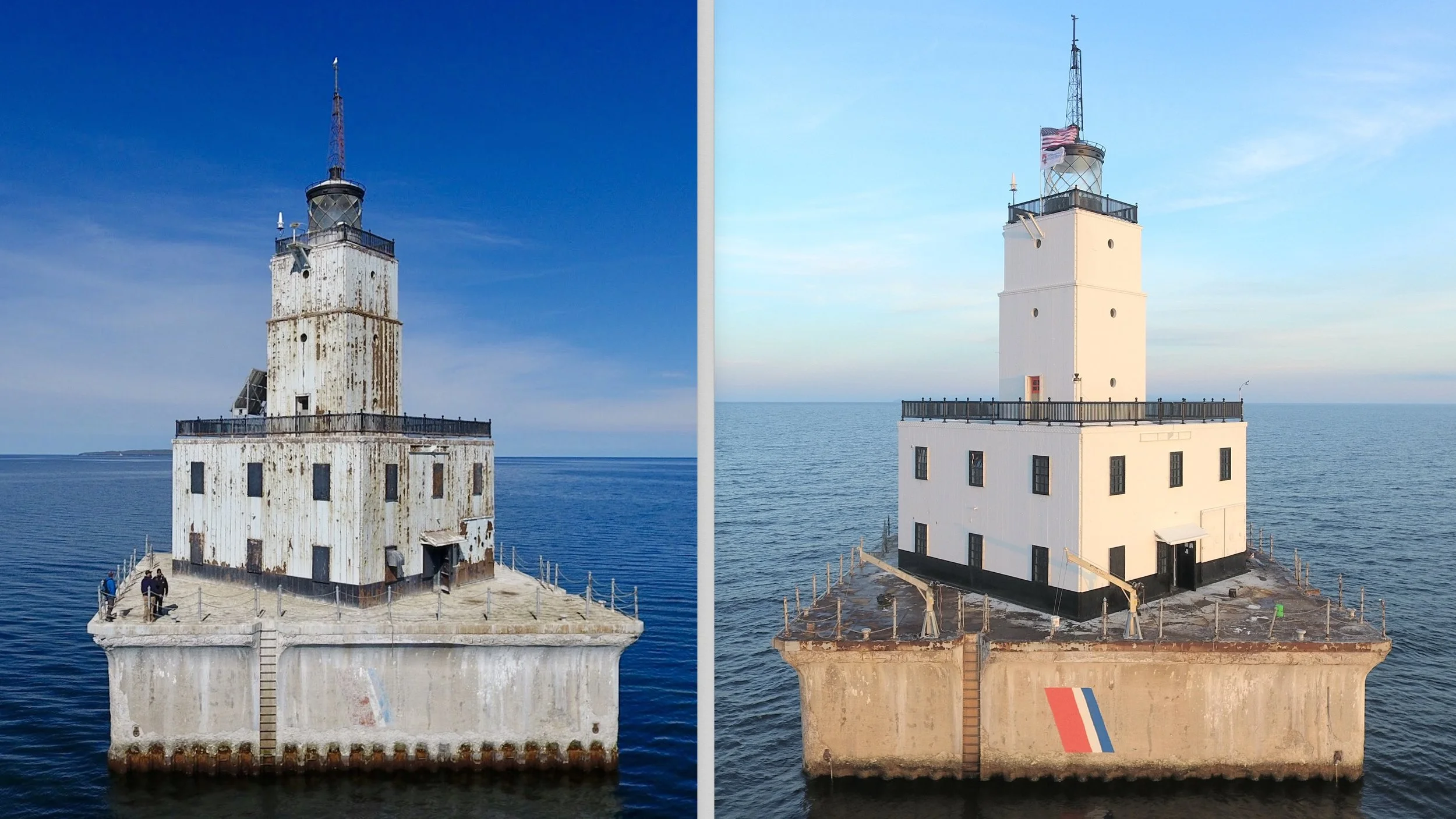
How the Crib looked when NMLK took ownership in 2016 vs after painting was completed. What a transformation!
2017-2018
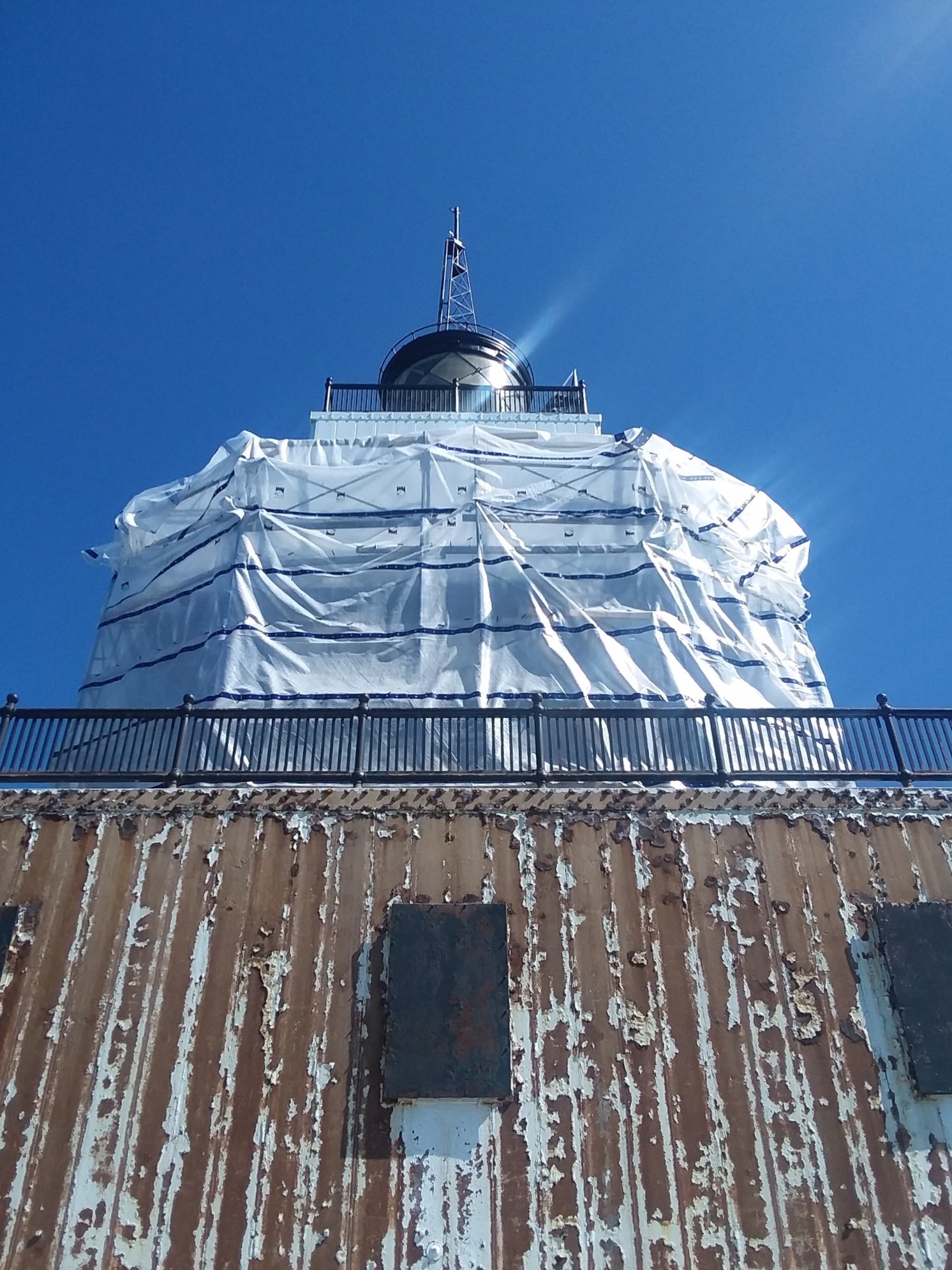
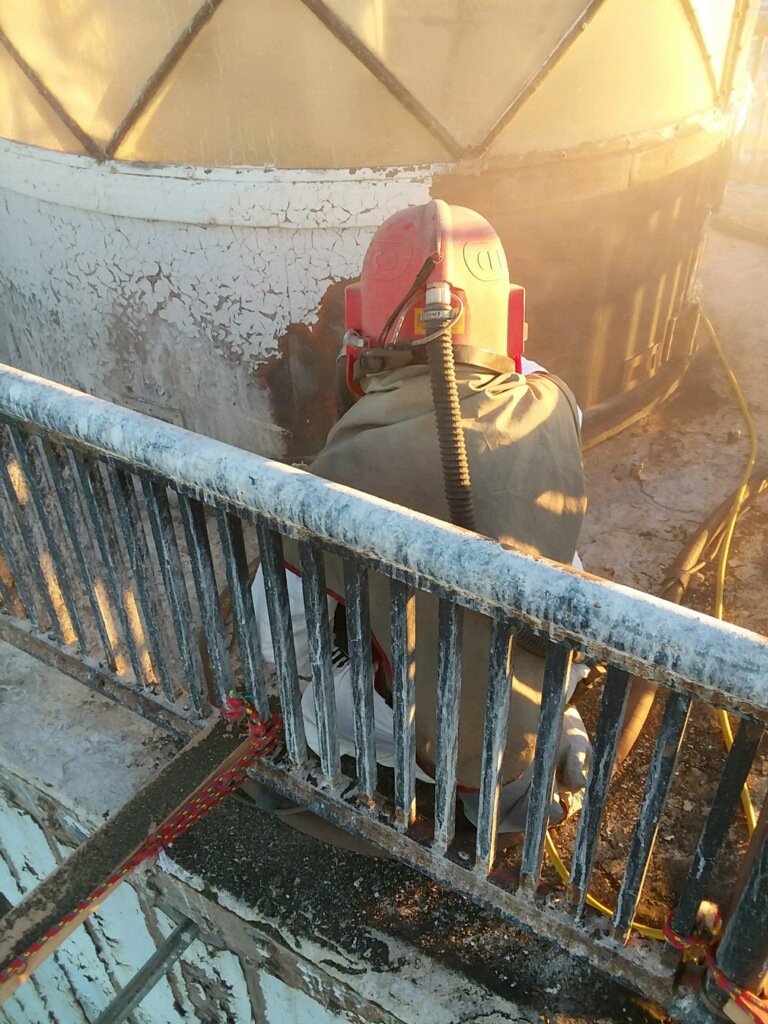
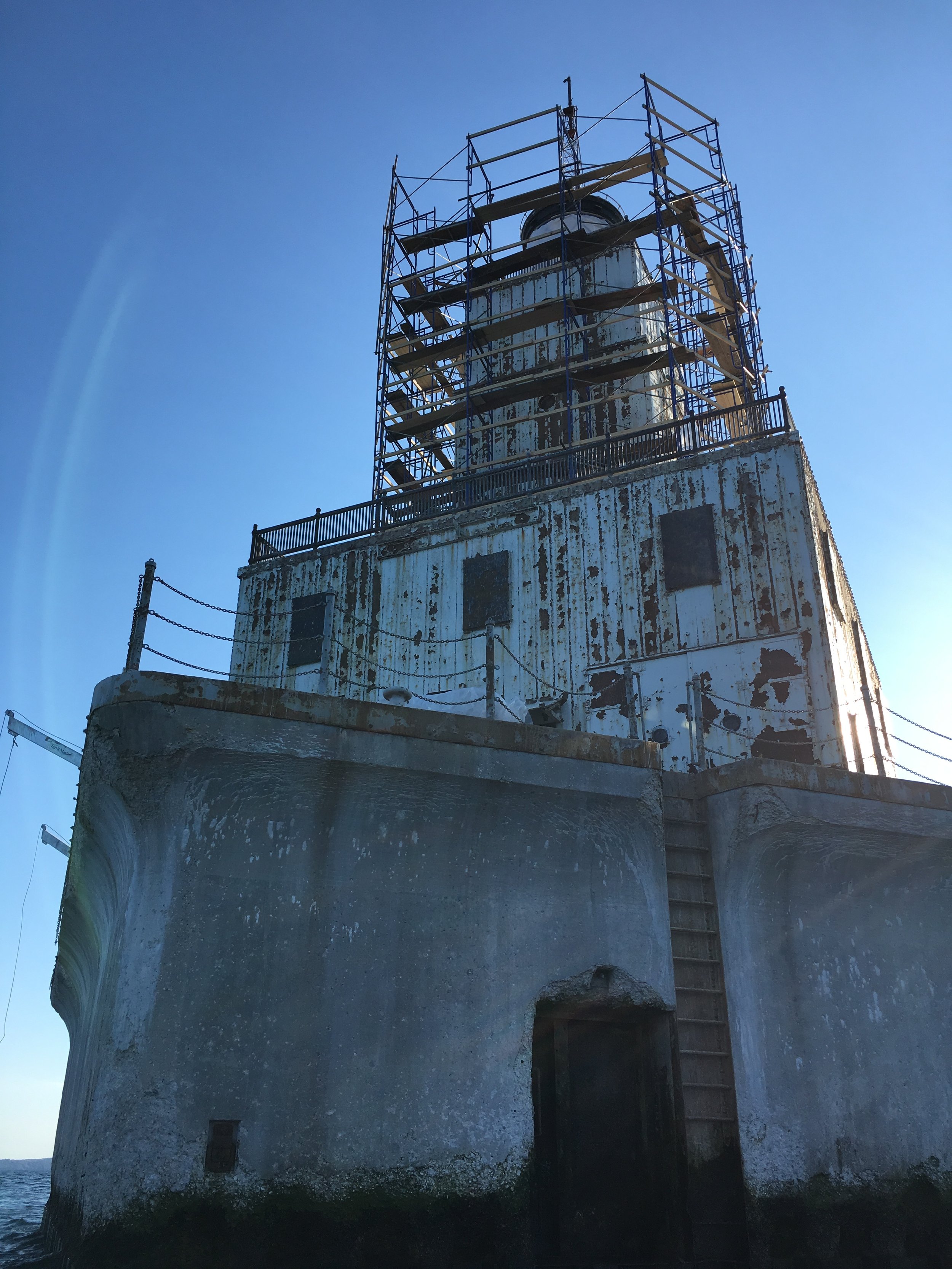
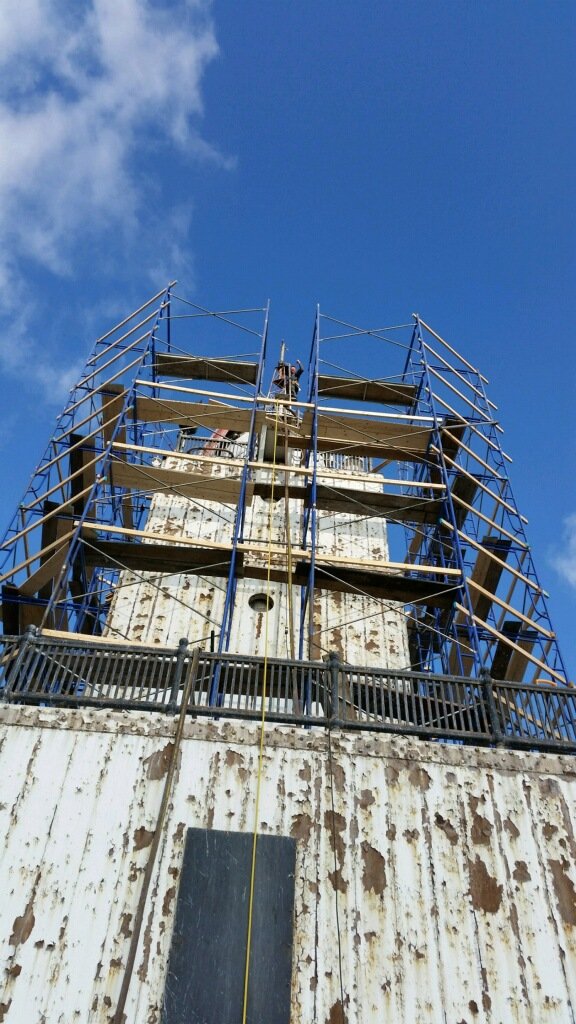
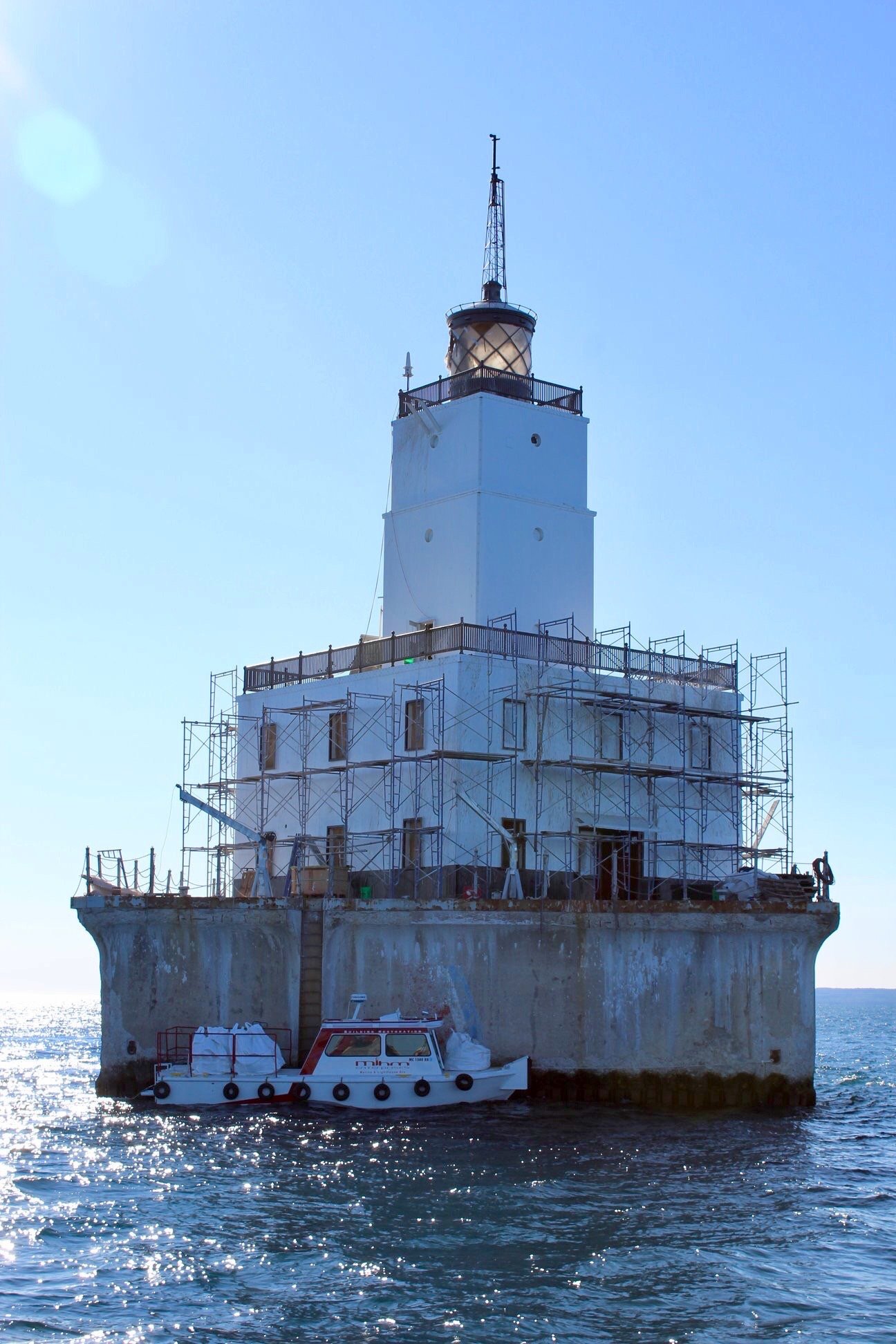
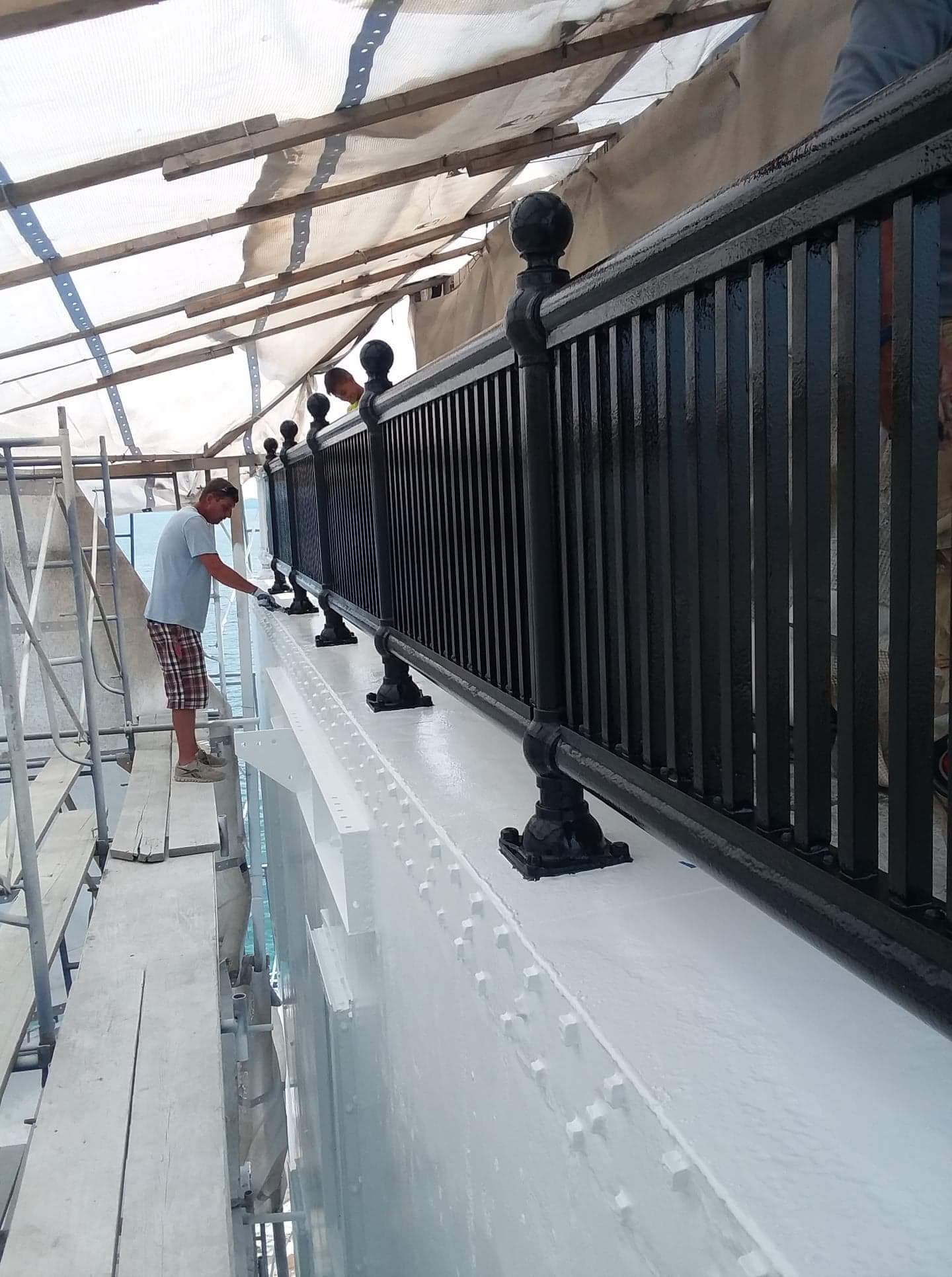
Our second restoration step was the biggest single part so far: painting the lighthouse’s exterior. As part of this process, a steel scaffolding was erected around the Crib’s tower. The scaffolding was then covered to contain particulates and materials released from the Crib during the paint preparation process. The lighthouse tower was media-blasted to remove old, lead-based paint. A coat of industrial-grade primer was applied, followed by coats of industrial-grade paint. The new paint hugely impacted the look of the Crib, but more importantly protected it from the elements. It also gave our restoration project a clear sign of progress, and great momentum!
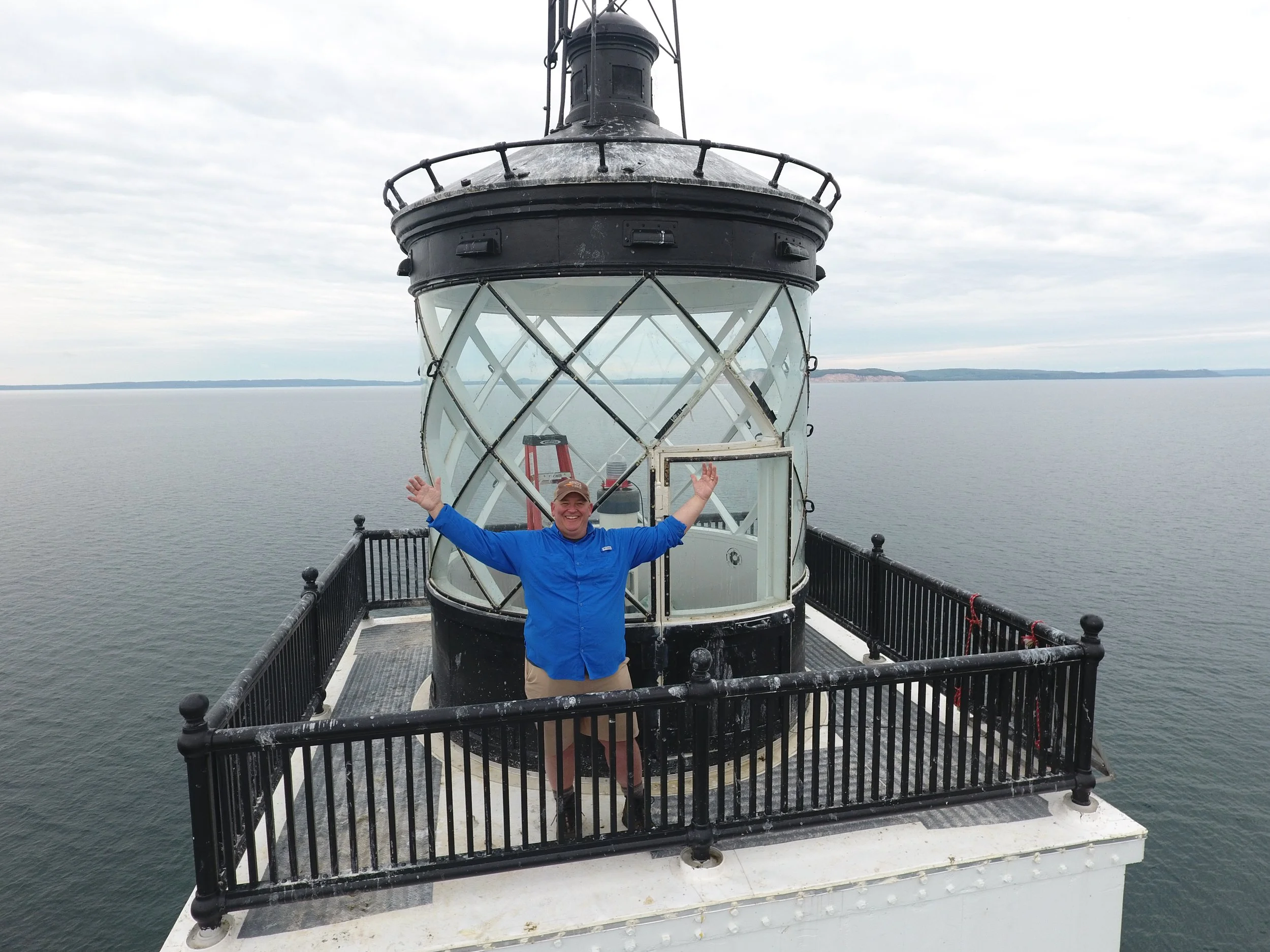
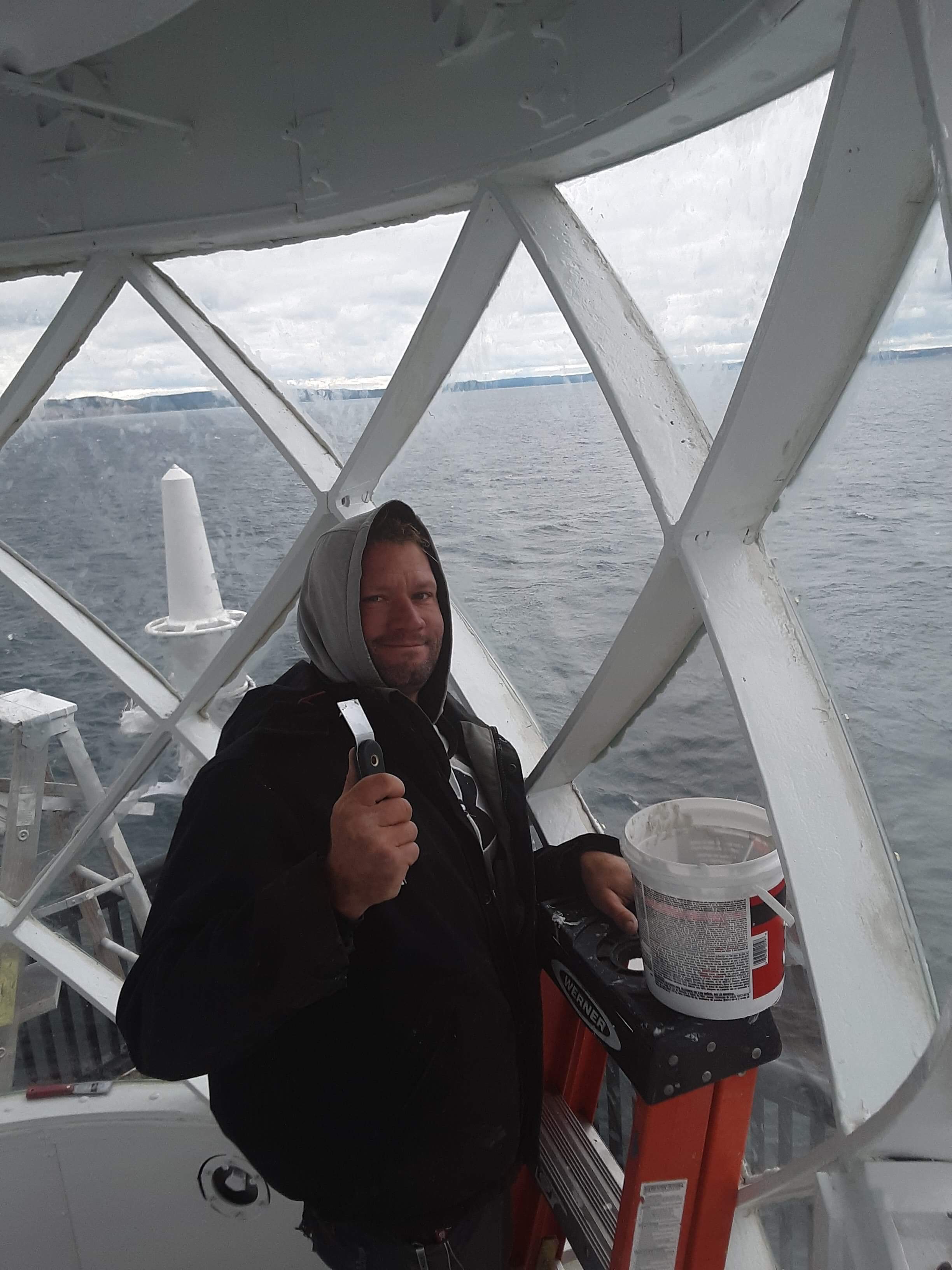
NMLK President Dan Oginsky celebrating the restoration of the glass lantern.
2018-2021
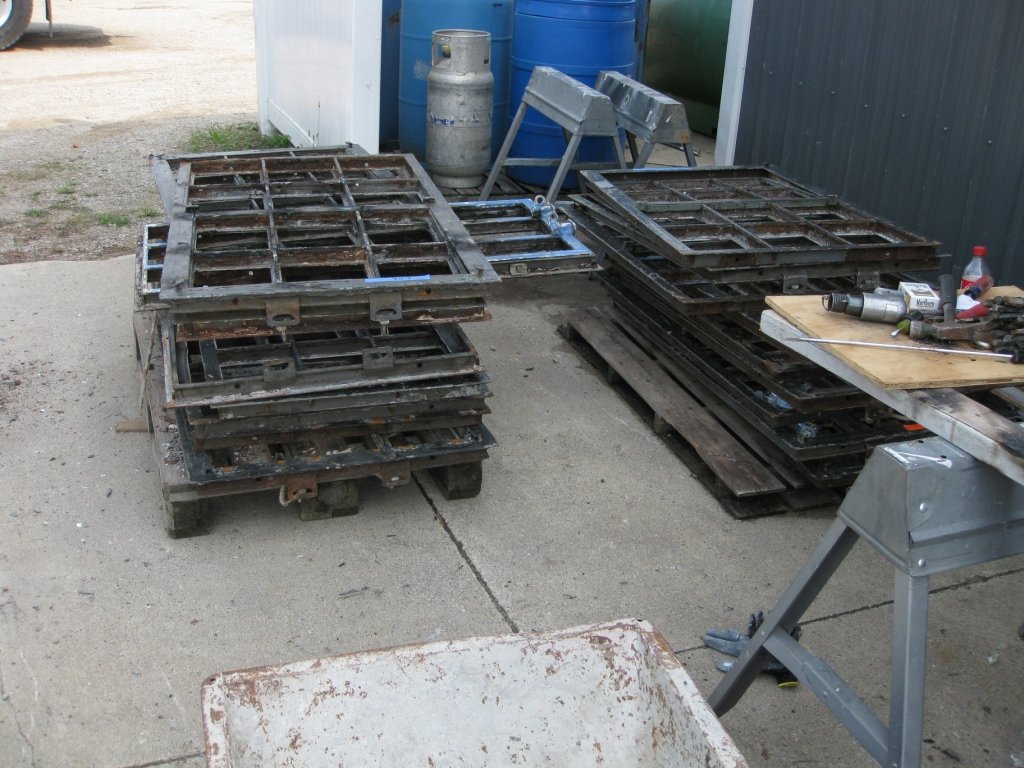
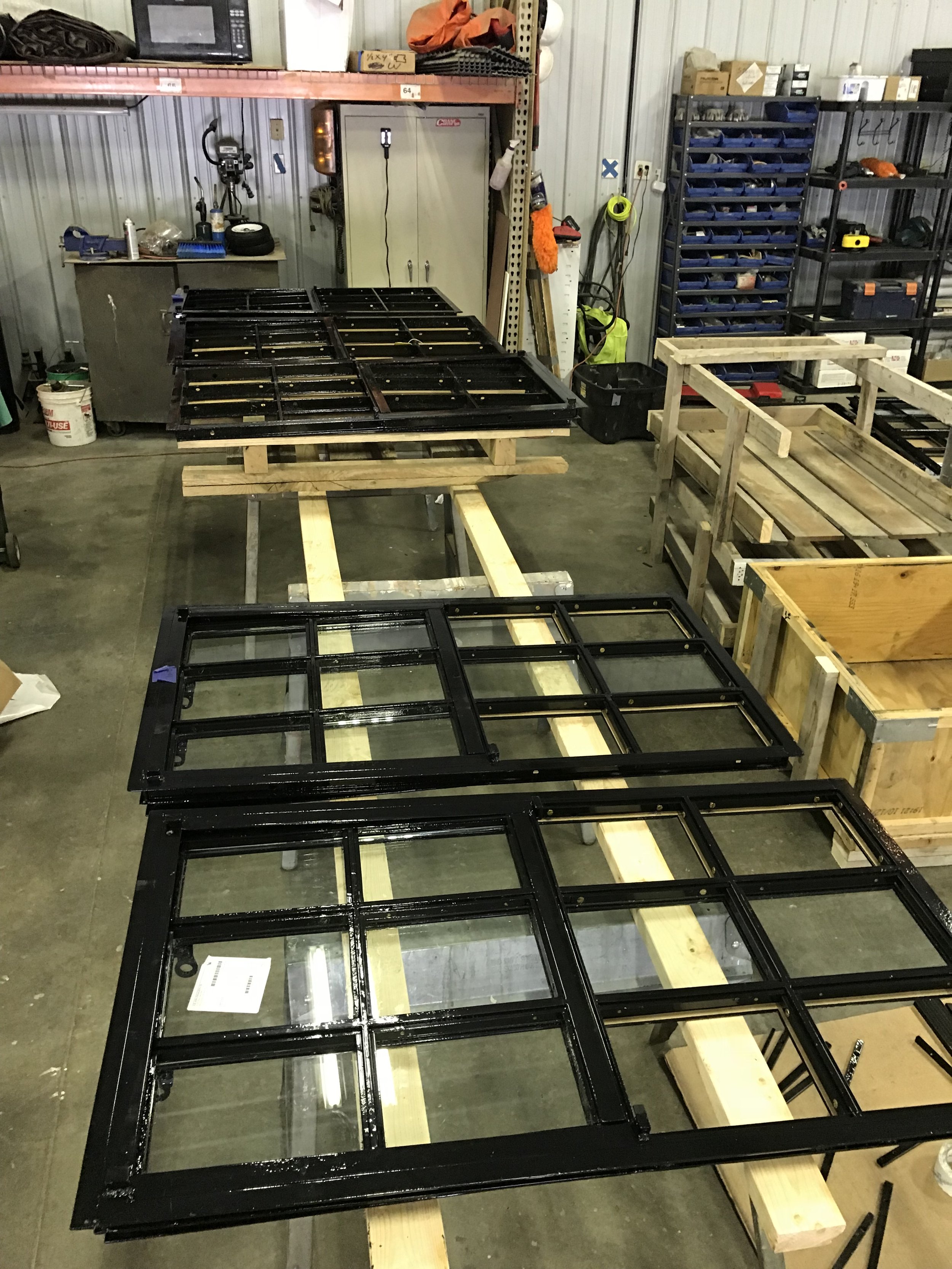
To reopen the Crib's 22 rectangular windows, each was removed and taken to a workshop in Hamilton. These original windows were fully restored by repairing the metal frames and replacing the glass. After the windows were reinstalled in their original locations, daylight returned to the Crib's interior spaces for the first time in 38 years! This reopened incredible views of the Manitou Passage, Sleeping Bear Dunes, and the Manitou Islands. In the lantern, 39 of the 40 glass panels had been broken and replaced with plexiglass. Forty custom curved glass panels were installed, allowing the beacon to shine brightly once again.
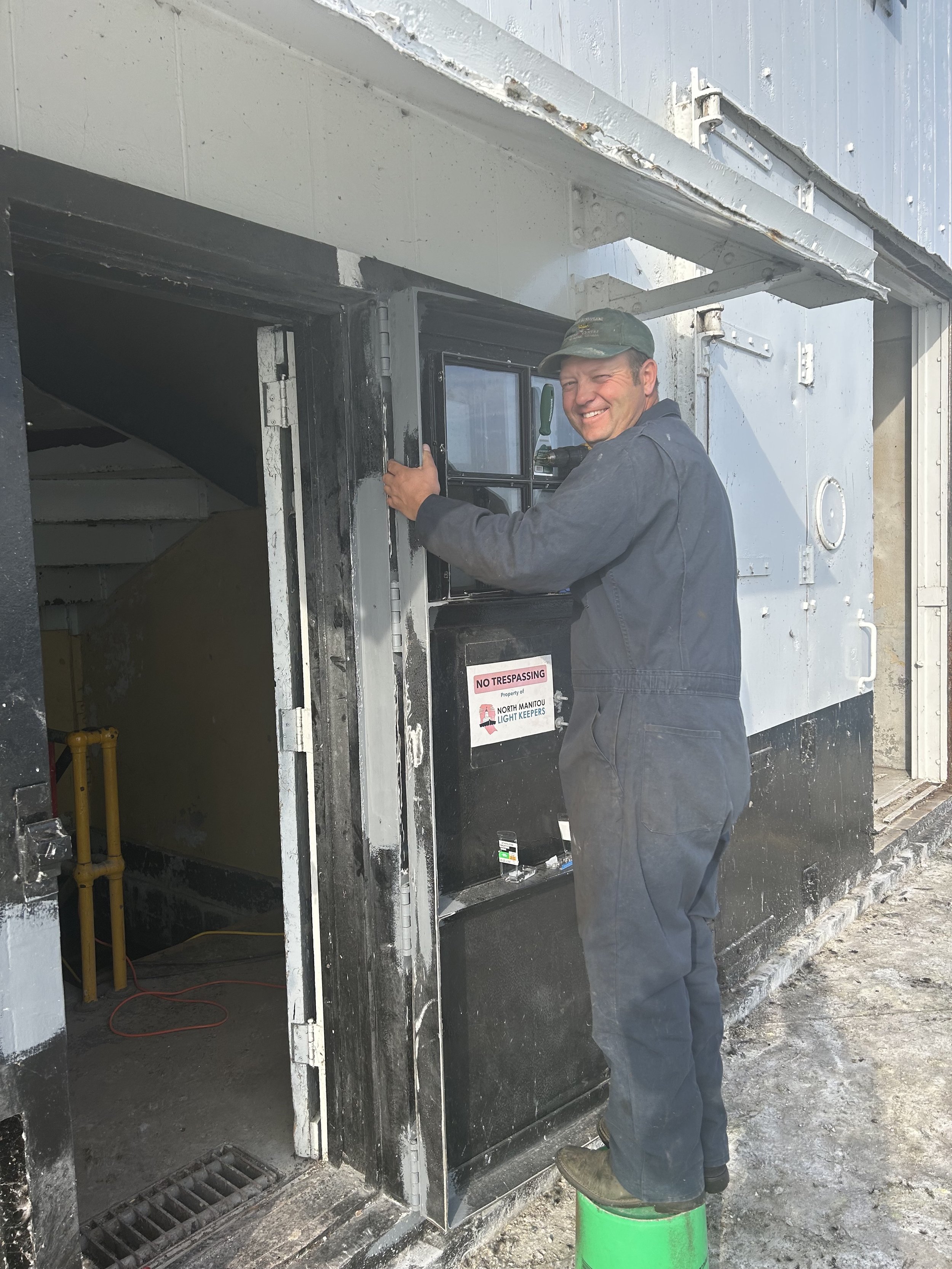
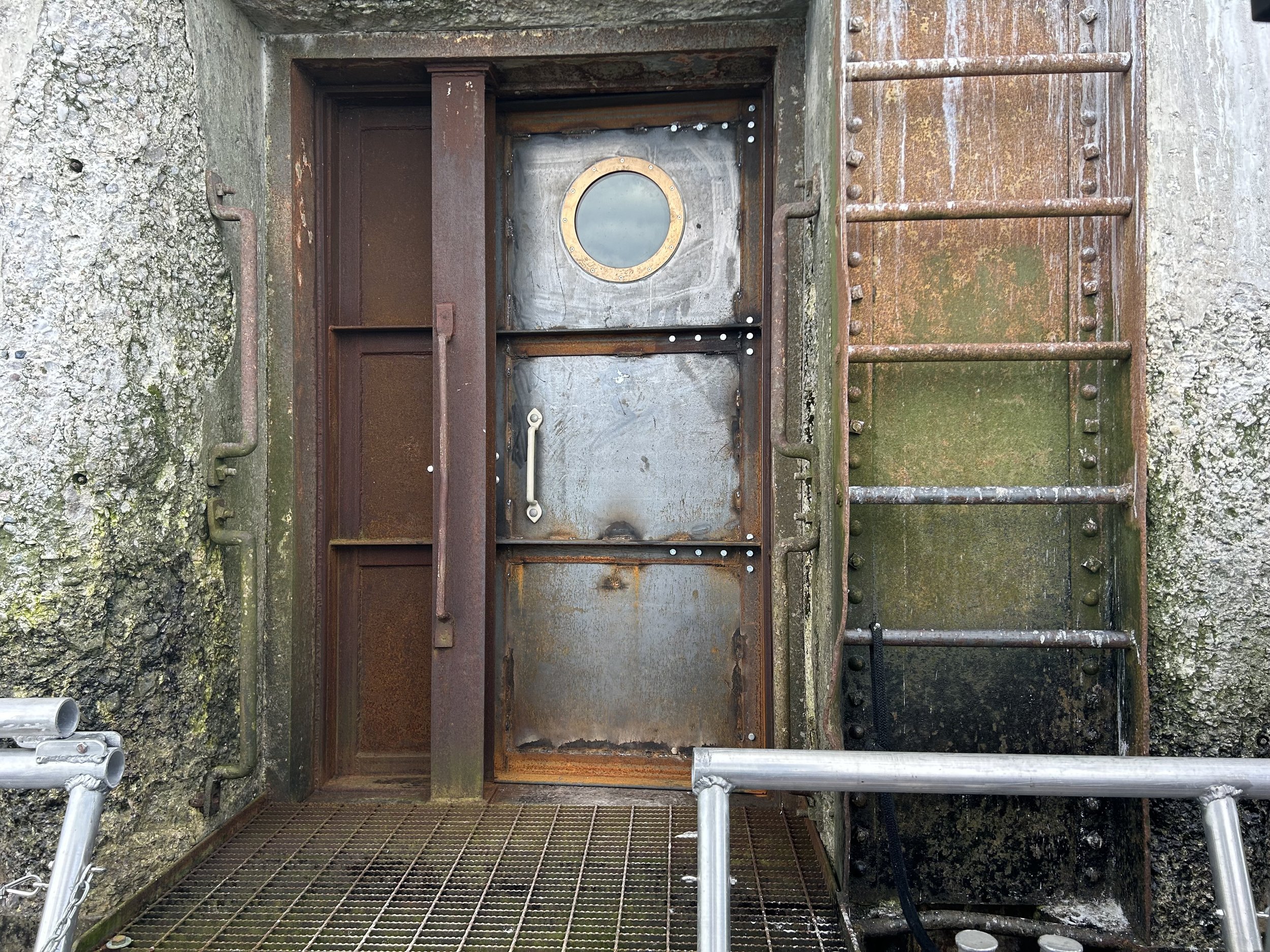
New, operational Sea Door makes the Crib accessible to a larger group of people.
2021-2022
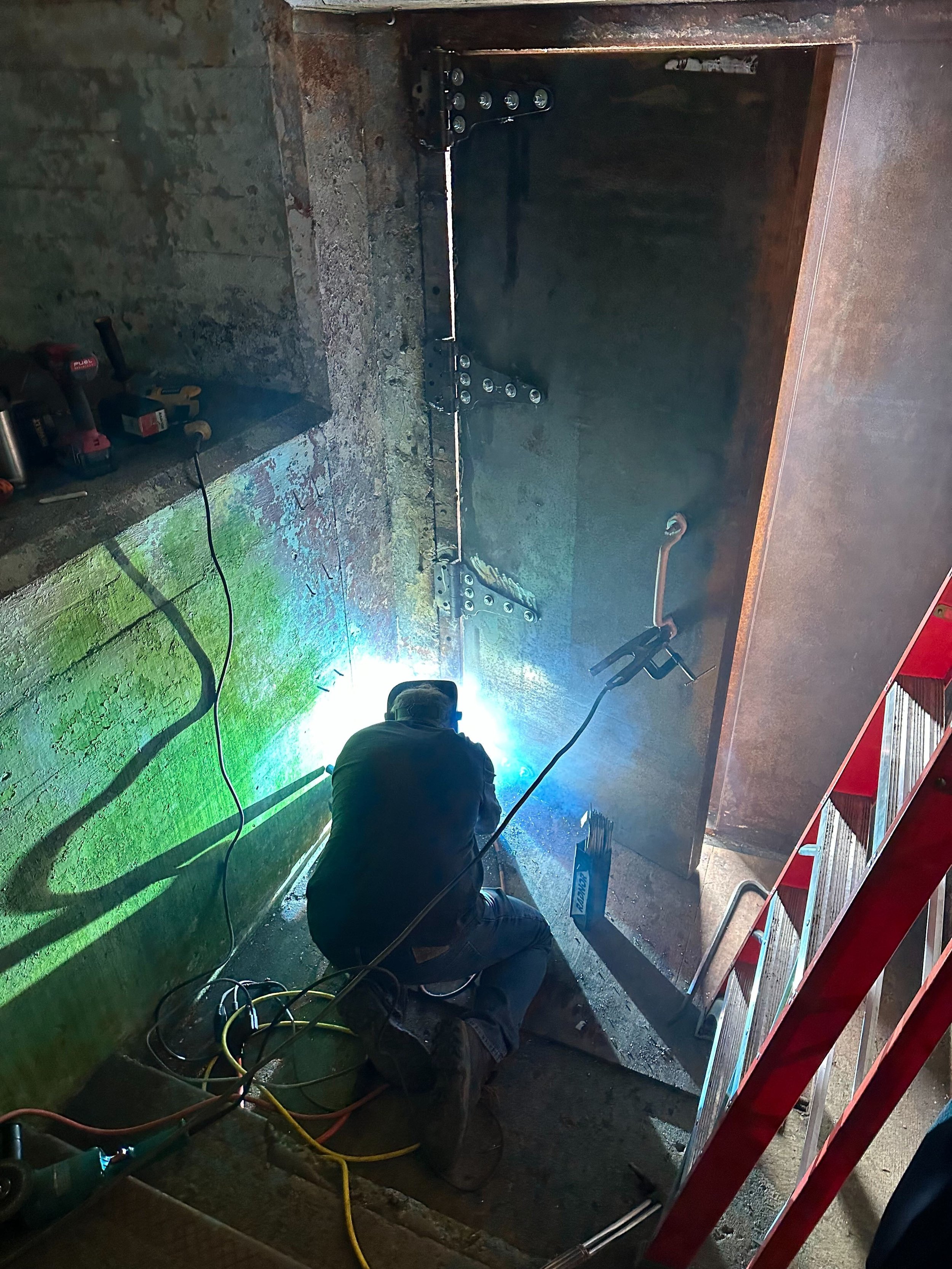
A unique architectural feature of the Crib is the Sea Door. This door allows access to the lighthouse at water-level into its basement. When the Crib was automated and moth-balled in 1980, the sea door was welded shut. In 2022, our contractors cut away and removed the existing door. Then, with an impressive combination of skill and hard work, they designed, fabricated and installed a new door using the original architectural plans. This is a thick and heavy steel door that swings easily on its hinges. With the sea door reopened, the Crib is much more accessible for tours to a wider range of people.
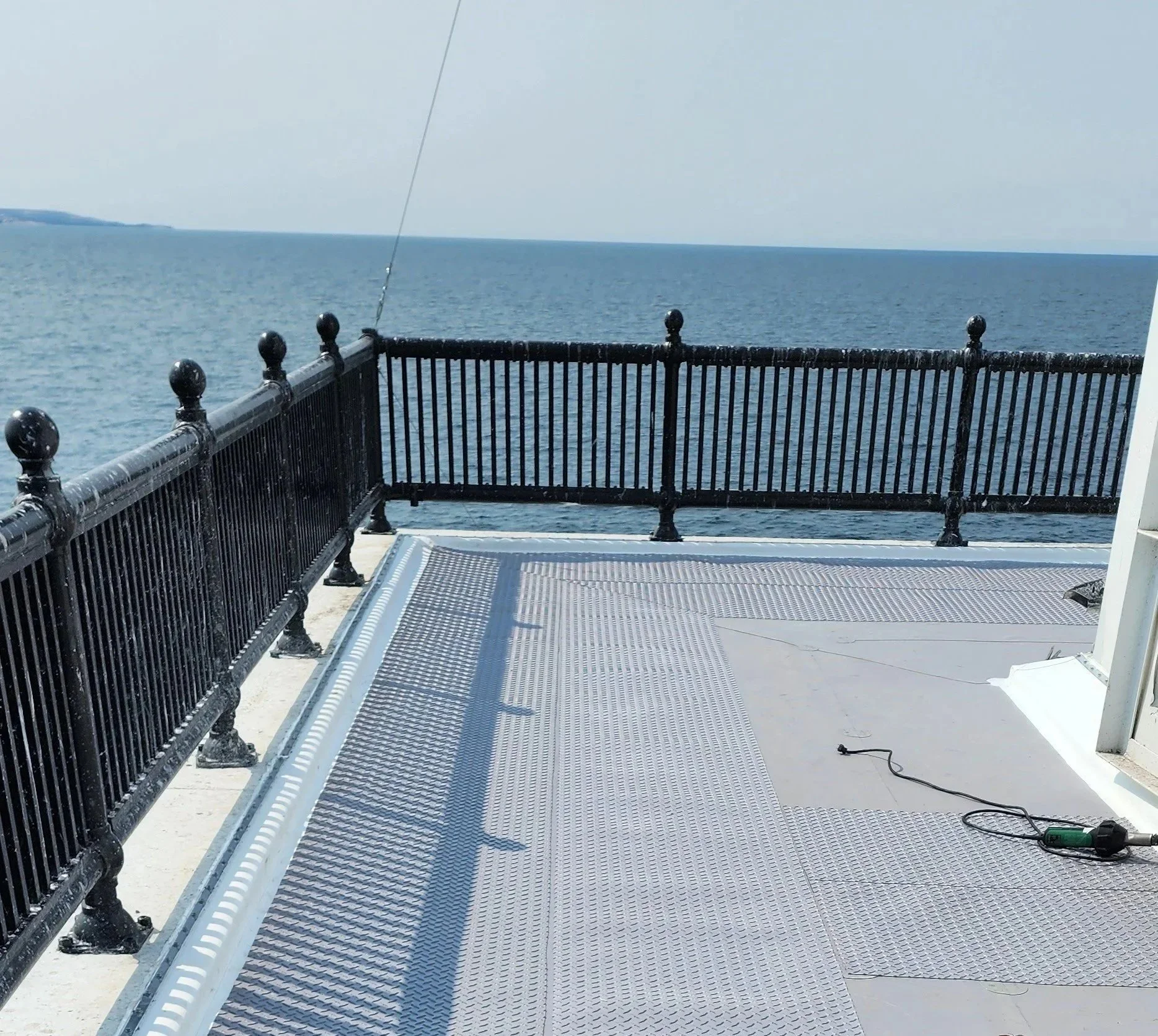
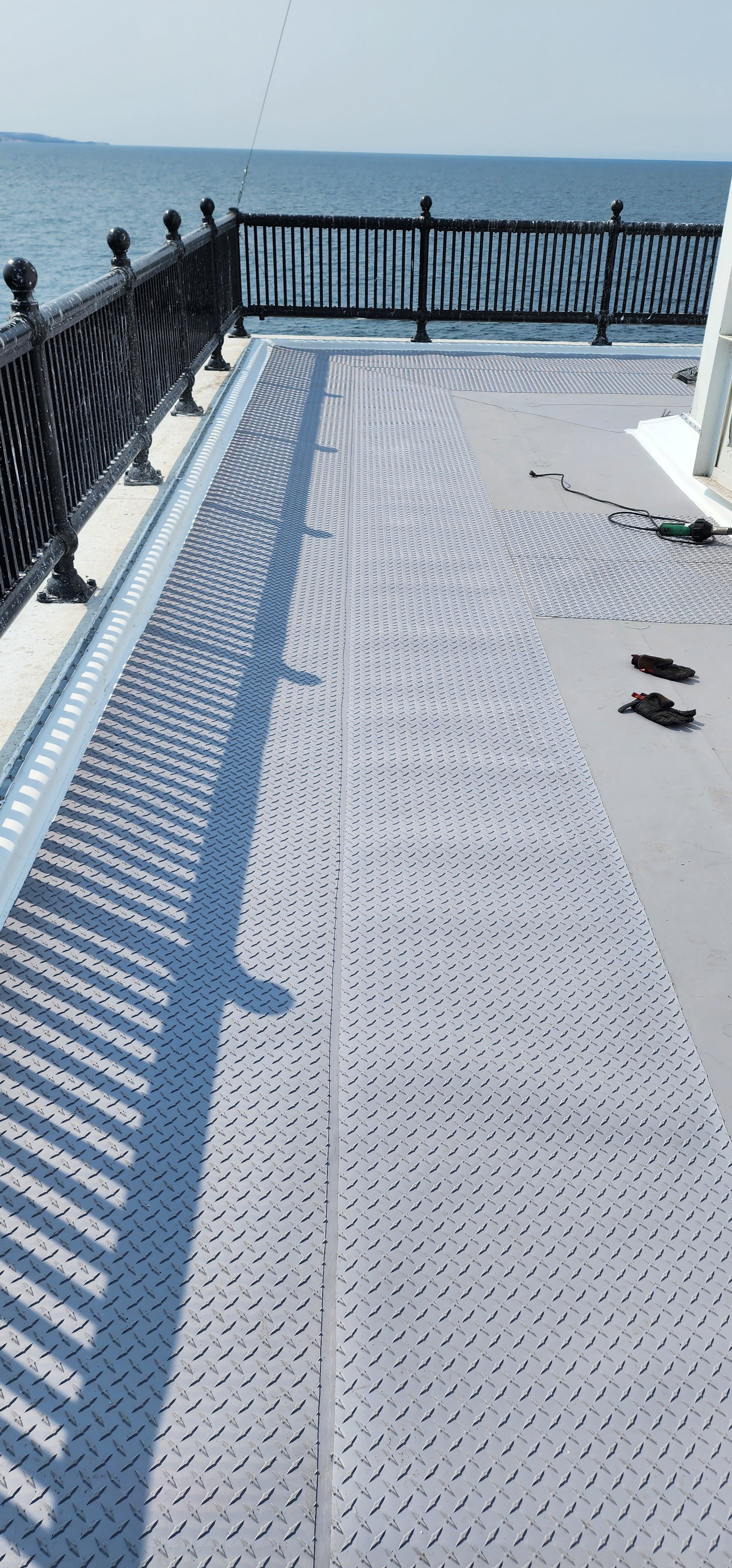
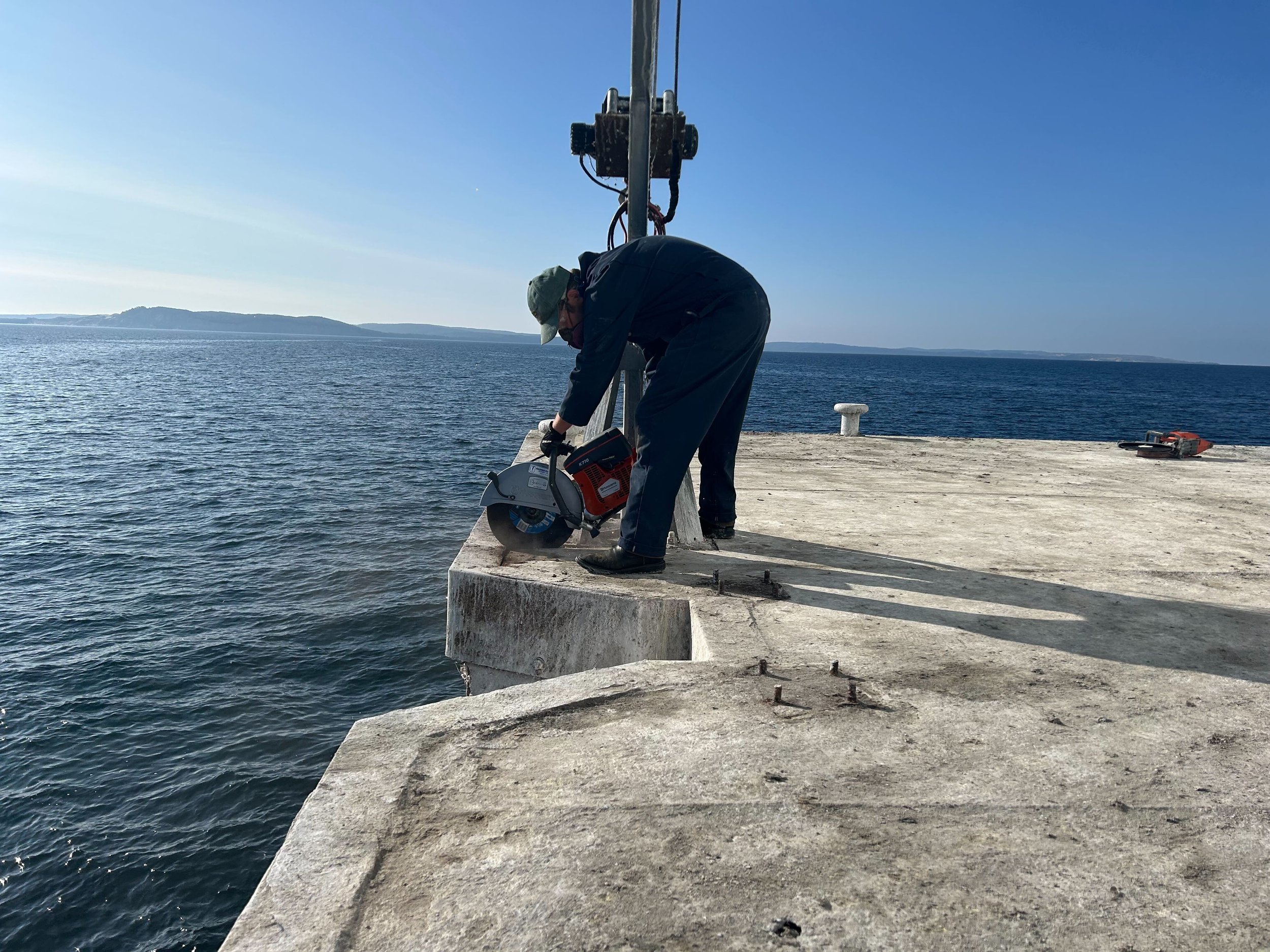
Newly finished surface of the L3 deck protects the interior of the Crib from water intrusion, while creating a durable walking surface.
2022-Present
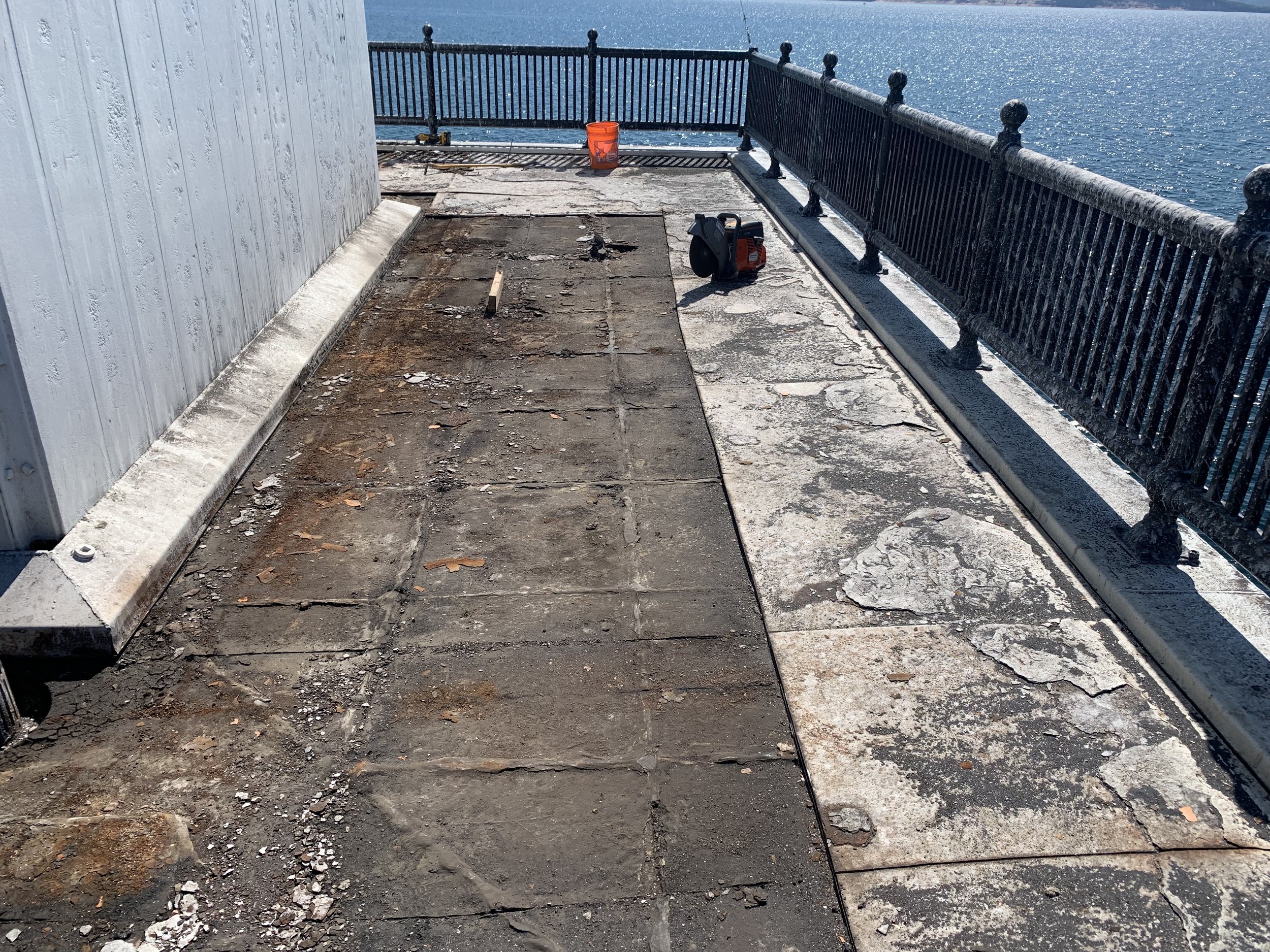
When the Crib was mothballed, steel plates were welded down on its flat decks at the top of the concrete base (the L1 deck) and on top of the tower’s second floor (the L3 deck). Over time, these steel plates corroded, and had allowed water to intrude into the Crib’s interior. Each deck required removal of these steel plates and resurfacing each deck. The L3 deck steel was cut into pieces and removed, and then replaced with a rubber roofing material. This surface protects the interior of the Crib from water intrusion, while creating a new and durable walking surface on the L3 deck. The L1 deck was an especially big job given the thickness of the steel plates and large size of the deck. Our crew cut up 16,000 pounds of steel, removed it from the Crib, and recycled it on shore.The concrete will need to be repaired before it is resurfaced in the near future. In addition, the 44 metal stanchions and chain railing on the outside of the L1 deck was removed and restored. They are being stored in the Crib until the resurfaced L1 deck is ready.
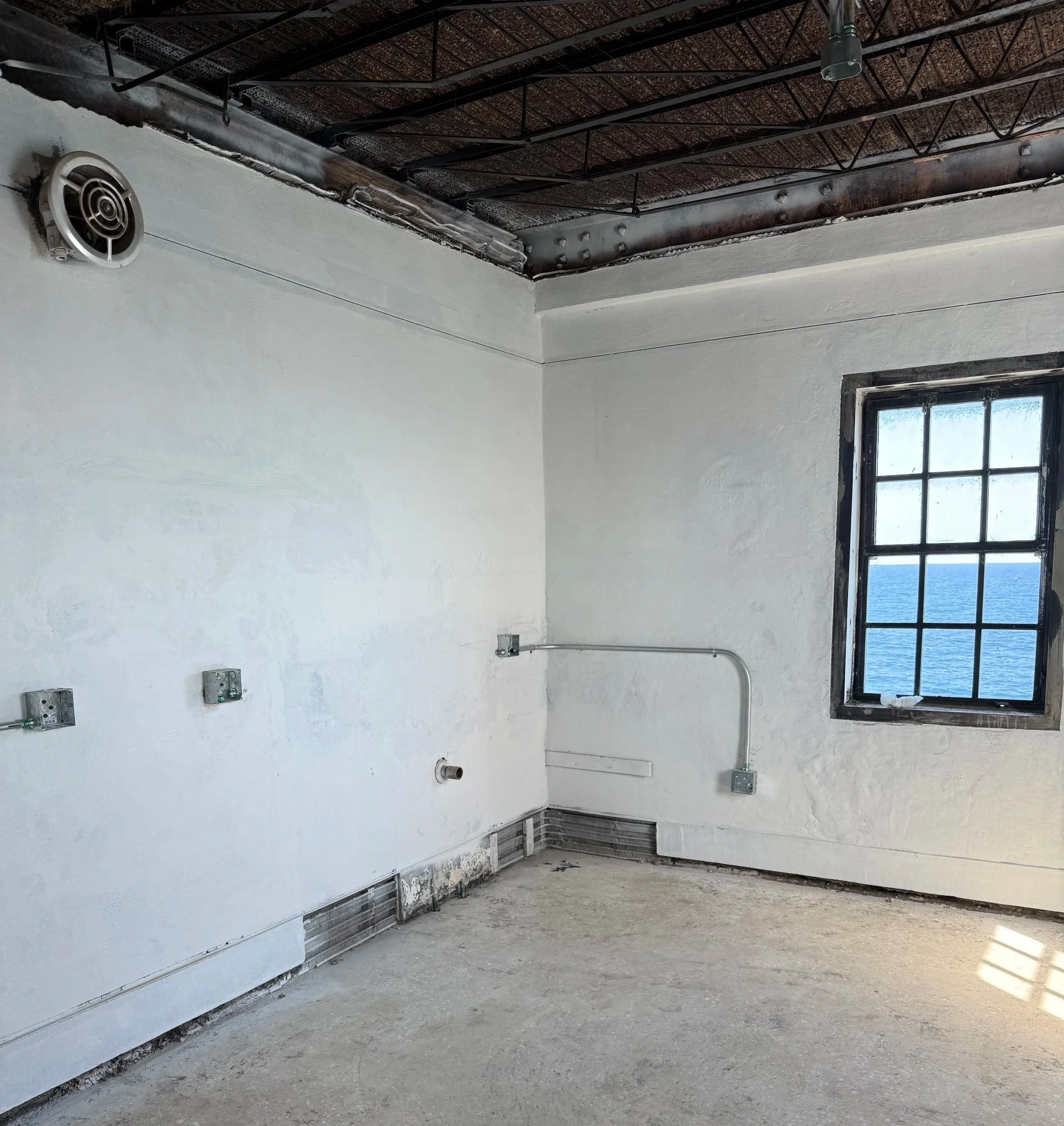
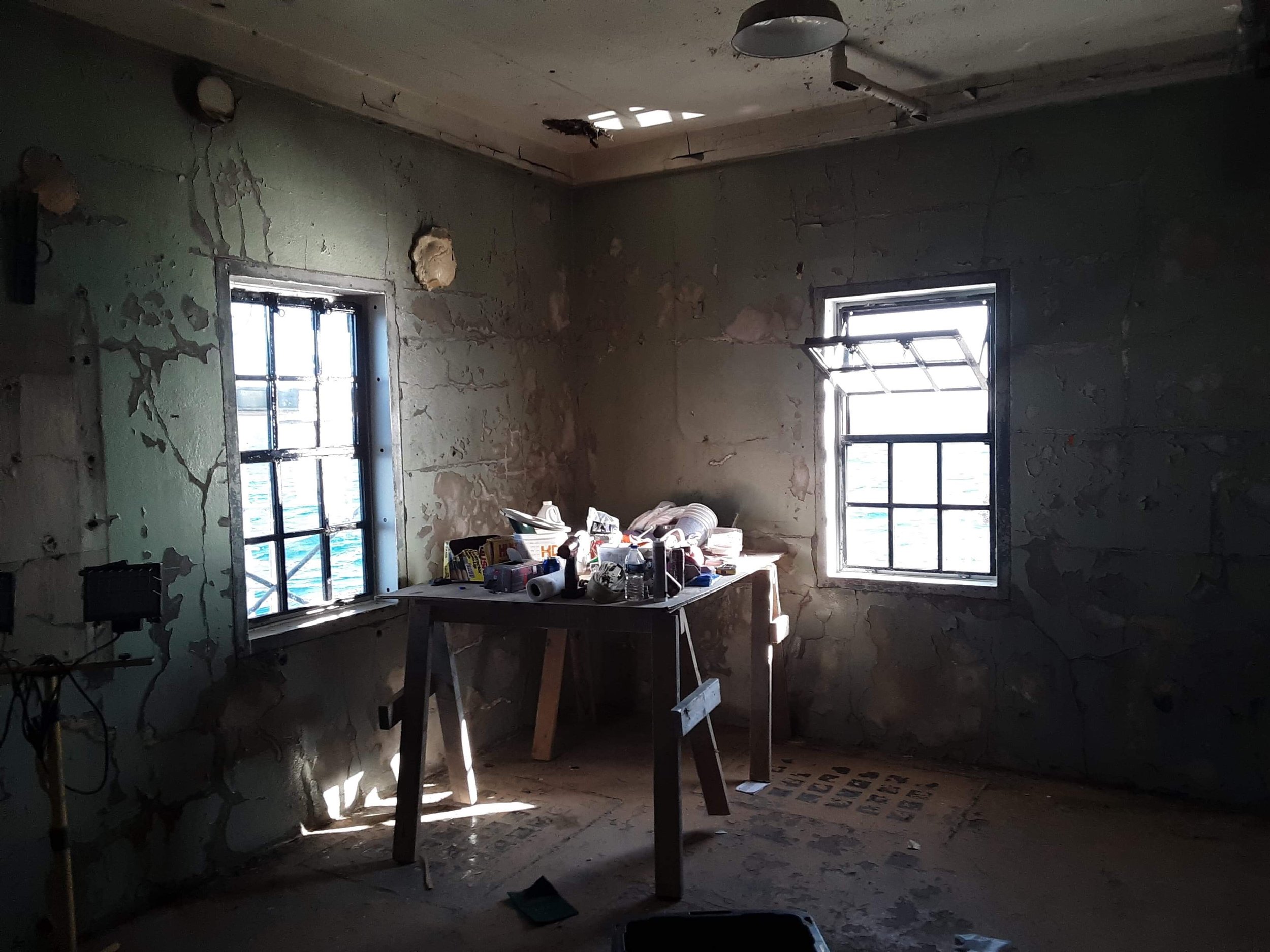
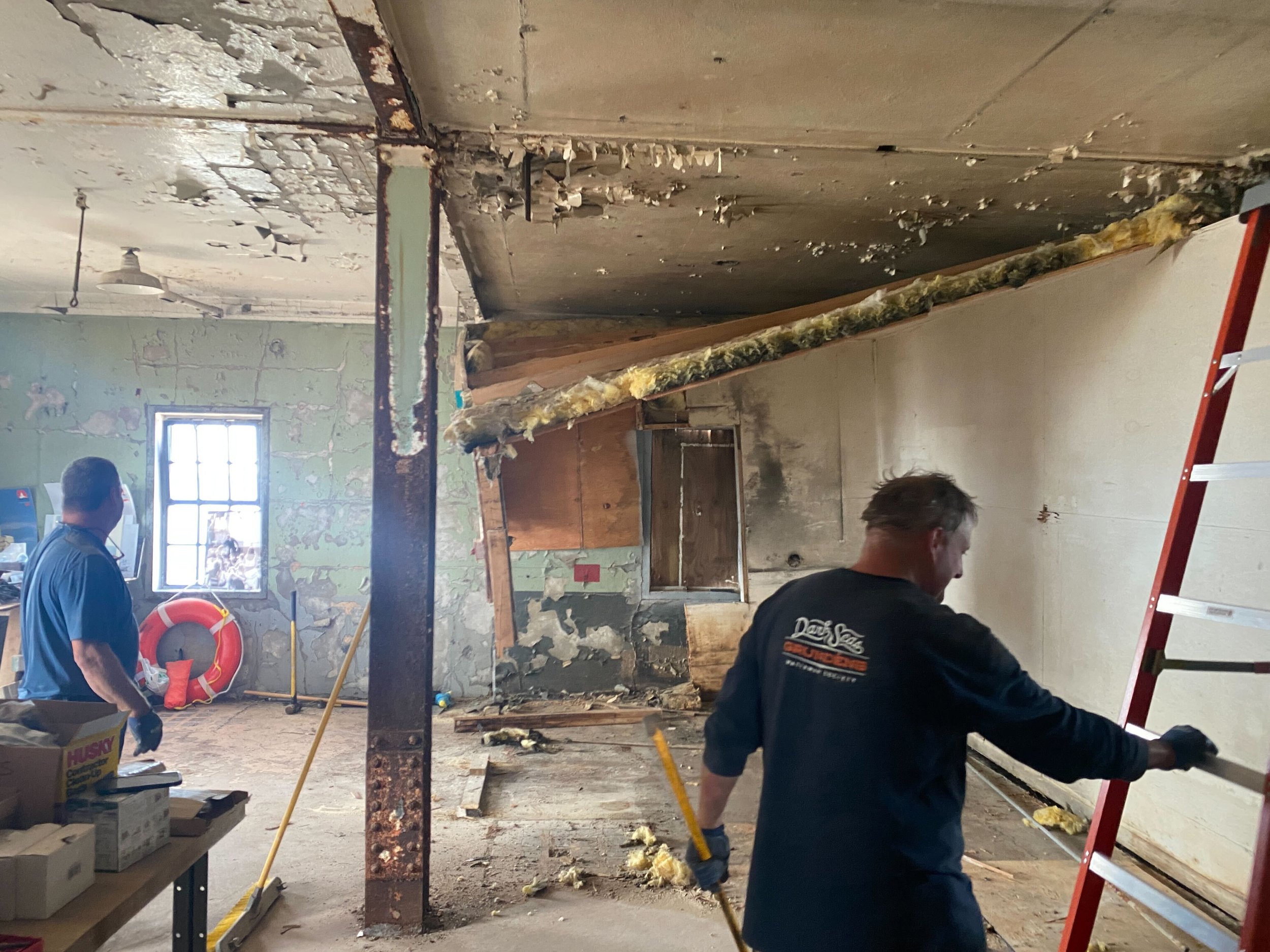
Interior space ready to receive paint and finishes!
2024-Present
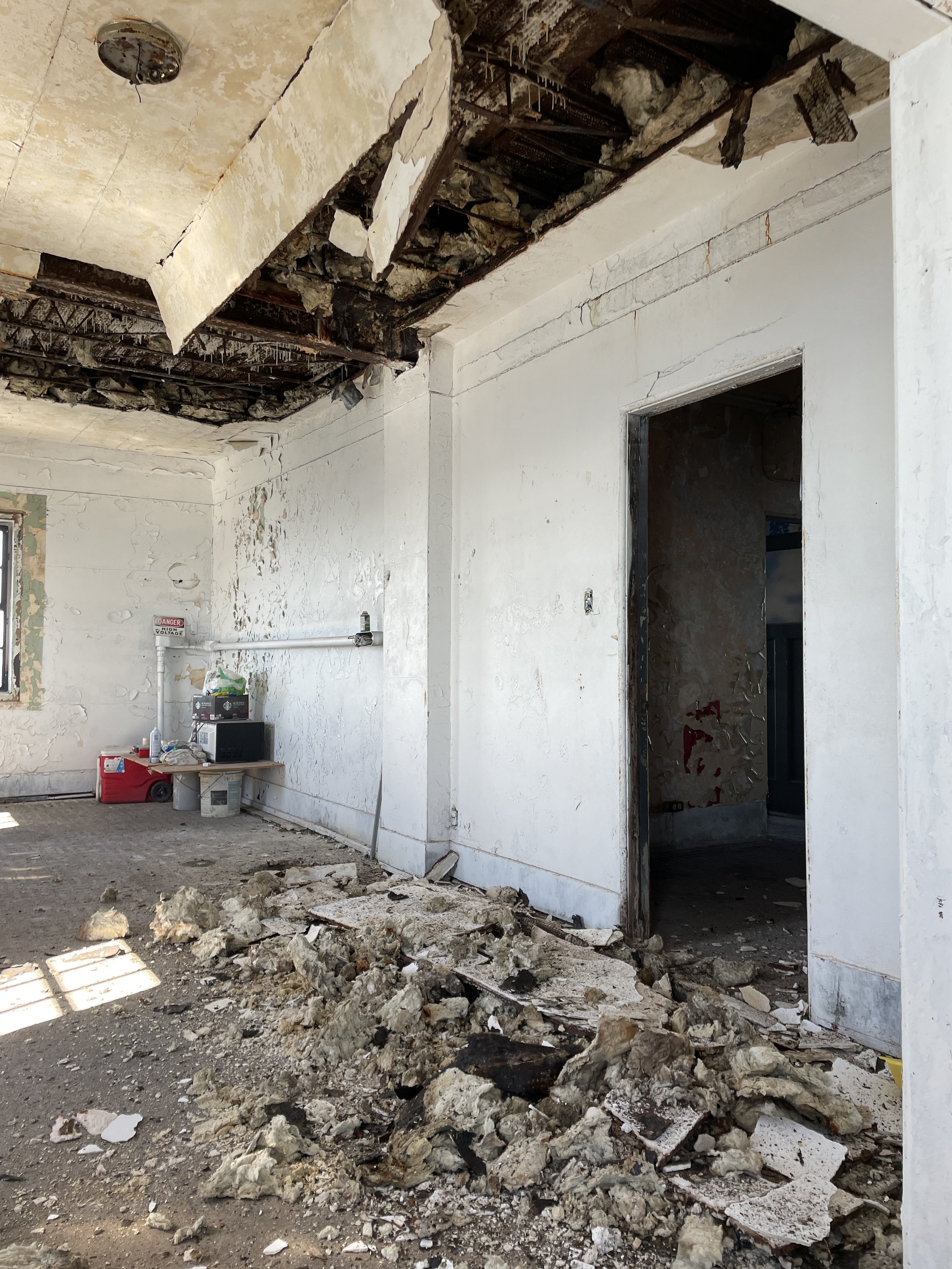
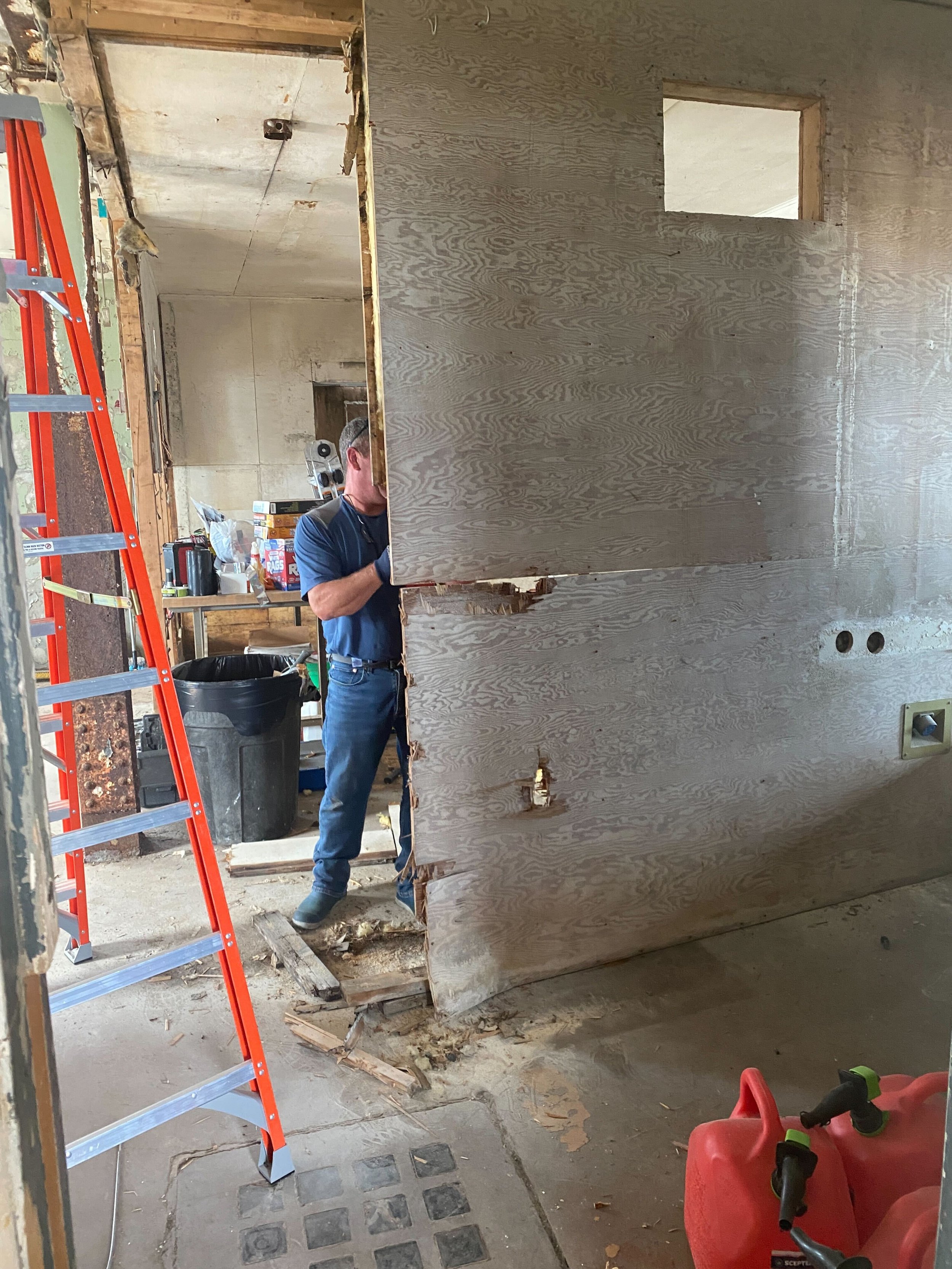
When the Crib was automated in 1980, its interior was gutted. Since that time, the walls and surfaces have deteriorated due to lack of care. A final phase of restoring the Crib is repairing interior surfaces and refinishing with new paint, flooring, cabinets, and furnishings. So far, we have completed demolition of interior walls not consistent with the lighthouse’s original design. We also demolished interior surfaces, such as the ceilings on the L2 level that had been damaged by water intrusion or decay. This summer, our paint crew invested time and great effort to scrape, sand, and patch walls, floors, ceilings, and stairs. This difficult process removed 80 years worth of lead-based paint and material. Work has begun to apply rust inhibitor to metal surfaces and primer to walls and ceilings, with final coat painting to follow. Completing interior finishes will include installation of cabinets in the kitchen to match historical designs. Once interior finishes are complete, we will install furnishings for the guest rooms, create a museum space on the L1 level, and return the pool table (that once was on the Crib but removed in 1980) to its rightful place!
2024-Present
We have begun the process of installing new electric and plumbing systems in the lighthouse. These systems will be sufficient to accommodate visitors on day tours, overnight stays, and limited special events. The electrical system will be powered by solar panels, which have been installed on the L3 deck’s outer railing to minimize visual impact. Throughout the Crib's interior, electricians have been working to install new conduit that will contain all new electrical wiring. Electrical finishes to be installed will include historic interior lighting, light switches, and power outlets. The plumbing system will draw and filter water from Lake Michigan and capture all waste in a holding tank, which will be pumped for disposal at a septic facility. The new plumbing system will include a water heater, water pump, necessary pipes, and historic plumbing fixtures like sinks, toilets, and a shower.
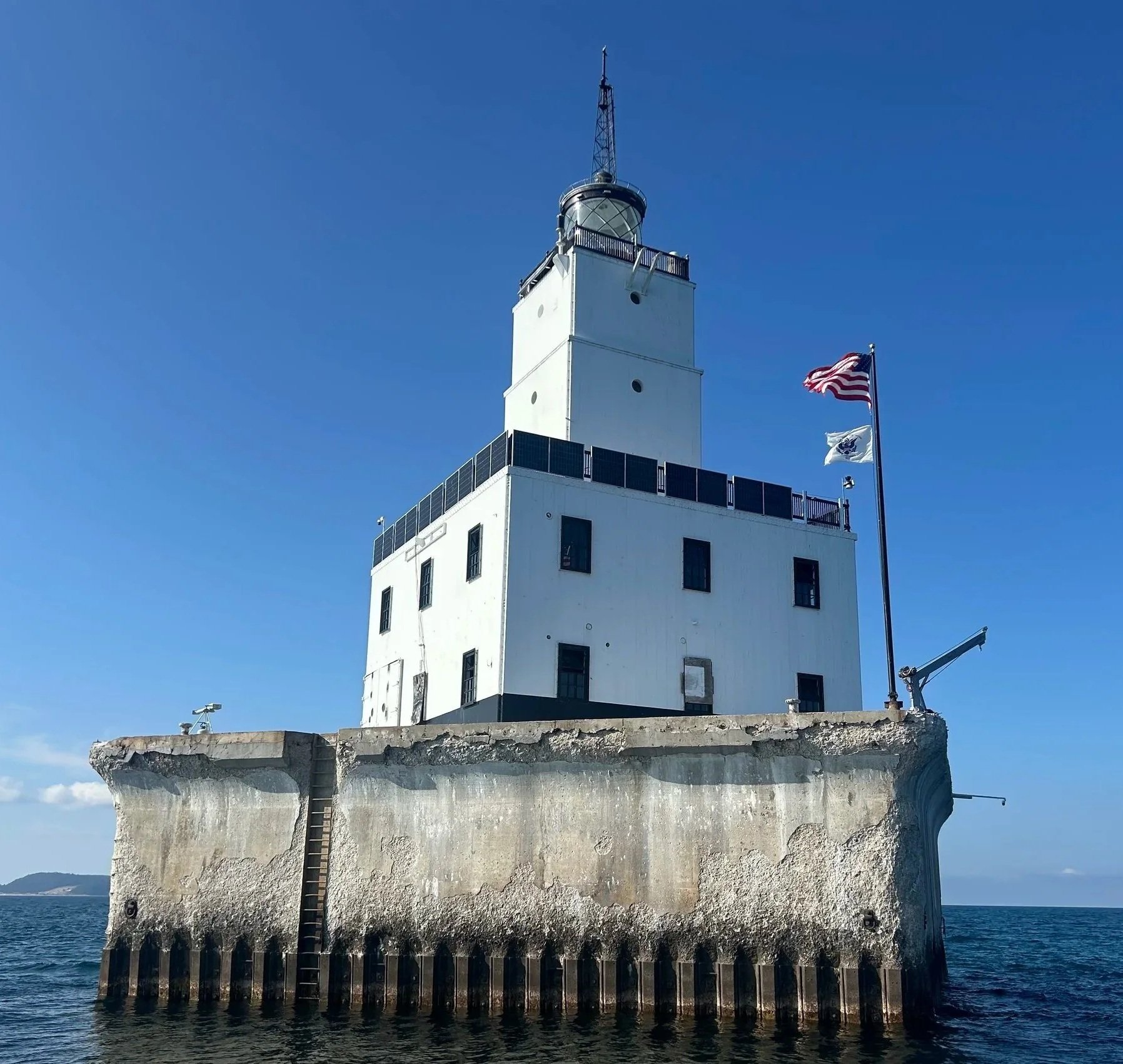
Solar panels installed on the L3 deck’s outer railing provide power for lighting and other power needs on the Crib.
Restoration work is only possible thanks to our Members, Donors, and Grantors.
THANK YOU!
the home stretch - 2026 and beyond
Complete Electrical and Plumbing Systems
Complete Electrical Conduit and Wiring
Install Electrical Finishes
Install Plumbing Components and Finishes
Install Interior Finishes
Painting Interior Spaces
Install Cabinets and Flooring
Install Furnishings
Create Museum
Return Pool Table
Plan and Complete Remaining Exterior Restoration
L1 Deck Resurfacing
Installation of Restored L1 Deck Railing
Our partners
We have worked with a variety of professionals in the restoration of the North Manitou Shoal Light. We are grateful for the expertise they have shared and quality workmanship they have done on the light. Our partners over the years have included:
Mihm Enterprises, Inc.
State Historic Preservation Office (SHPO)
Cherryland Electric Cooperative
Czapski & Sanders Associates
Manitou Island Transit
Geoff Niessink, Jimmy Munoz, Joel Petersen and many other local craftsman
Dusty Klifman, Blueyes Below
Peter Jenks, Inception Cabinetry
Lynden Johncock, Williams & Bay - Environmental Services